





In the dynamic world of digital marketing, understanding customer behavior online is paramount. Pixel tracking is a crucial technology for sophisticated marketers that enables them to unlock detailed insights about users and measure their campaign performance with ease.
How do pixels work?
Pixels, or “tracking pixels,” are tiny, often-invisible images or pieces of code embedded on a webpage or email. When a user visits a website or opens an email, the pixel sends a signal back to the server. This signal, or “ping,” carries data about the user’s interaction, such as the time of their visit, the pages they viewed, and any specific actions they took.
How are pixels different from cookies?
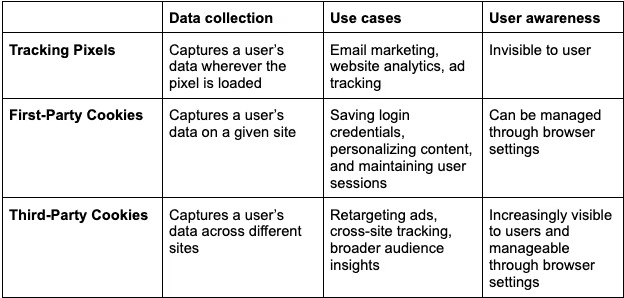
There are a lot of ways to glean user information. While tracking pixels, first party cookies, and third party cookies all serve similar purposes, they do so in different ways. Understanding these differences is crucial for marketers who want to leverage the right tools in the right way to maintain compliance and gather the data they need.
Use this table below to differentiate between tracking pixels, first party cookies, and third party cookies.
Why use tracking pixels?
Pixel tracking offers several vital benefits to marketers, including but not limited to:
- Performance measurement - by tracking user actions, like email opens, clicks, and time-on-page, marketers can measure the effectiveness of their campaigns with high precision.
- Audience segmentation - data from tracking pixels can help create detailed user profiles and segment a given audience based on behavior. This enables more personalized and targeted marketing efforts
Pixels also have various use cases when it comes to digital marketing. Some of the big ones are:
- Website analytics - use pixels to understand how users navigate a website, which pages they visit, and how much time they spend on each page
- Ad campaigns - use pixels to measure the performance of display ads, social media ads, and other paid campaigns to optimize spend and improve ROI
- Email marketing - use pixels to track open rates, click-through rates, and user engagement with your email content
- E-commerce - user pixels to monitor how users interact with your products and website to refine your sales strategies. Pixels can surface browsing patterns, add-to-cart actions, and other significant clicks
What is the Northbeam Pixel?
Northbeam takes advantage of pixels and pixel tracking to generate actionable insights and near-real-time information about user behavior.
Like pixels in general, the Northbeam Pixel is a snippet of code that allows Northbeam to collect important behavioral information about your website visitors. This information then feeds into Northbeam’s backend device graphic, allowing us to track customer journeys from site visit to purchase, along with all the other marketing touchpoints in between.
Read more in our Knowledge Base.
What’s the future of pixel tracking?
As digital marketing technologies continue to evolve, pixel tracking is expected to become even more sophisticated. Technologies like artificial intelligence and machine learning will enhance our ability to predict user behavior and personalize marketing efforts in unprecedented ways. It’s key to stay ahead of privacy concerns and regulations to understand how they will affect pixel data.
With its advanced features and ease-of-use, the Northbeam Pixel represents the next generation of tracking technologies, offering enhanced accuracy, comprehensive data collection, and near-real-time reporting so marketers can optimize their strategies and drive better results.







































































.avif)





























%25201.avif)



.avif)

















.svg)
